
How to Keep Plants Alive During Water Restrictions
Water restrictions come and go across Australia, and when they hit, our gardens usually feel it first. Anyone who has tried to keep plants alive through a hot summer knows the struggle. You water in the morning, feel confident for a few hours, then look again in the afternoon and everything already looks thirsty.
The good news is that your plants do not have to suffer every time watering days tighten up. With a few simple habits, and the right kind of pots, you can keep things alive without breaking any rules or wasting water.
Start with Healthier Soil
Soil is often the forgotten part of the garden, but it really decides how well plants cope with limited water. Much of Australia has soil that drains too fast or becomes water repellent, and that makes things difficult during restrictions.
It helps to mix in compost, some clay or bentonite if you are dealing with sand, and a wetting agent every now and then. It does not have to be perfect, just enough to help the soil hold water a little longer. A layer of mulch on top works wonders too, especially with the summer sun. (Could plug Lechuza Pon here)?
Deep Watering Works Better
If you only have a couple of watering days each week, slow, deep watering is far better than a quick spray. The idea is to get moisture down into the roots instead of leaving it on the surface.
A good soak encourages deeper roots, and deeper roots survive heat far better. You are not using more water, just applying it in a way that helps the plant take advantage of it.
Pick Plants That Can Handle Dry Conditions
Australia is full of plants that grow happily with less water. If you are adding new plants, try a few that naturally cope with heat and dry spells.
Grevilleas, kangaroo paw, rosemary, lavender, lomandra, succulents and similar hardy shrubs are usually reliable. They still need some water, but they bounce back much faster during restrictions.
Mulch Helps More Than Most People Expect
A decent layer of mulch keeps soil cool and stops water disappearing into thin air. Even a small amount can make a big difference. Wood chips, straw or bark are all fine. Once you put it on, you immediately see the soil staying moist for longer.
Choose Pots That Save Water
This is where a lot of people get caught out. Traditional pots look great but they lose water quickly. The top dries out, the water drains through too fast and a lot of it never reaches the roots.
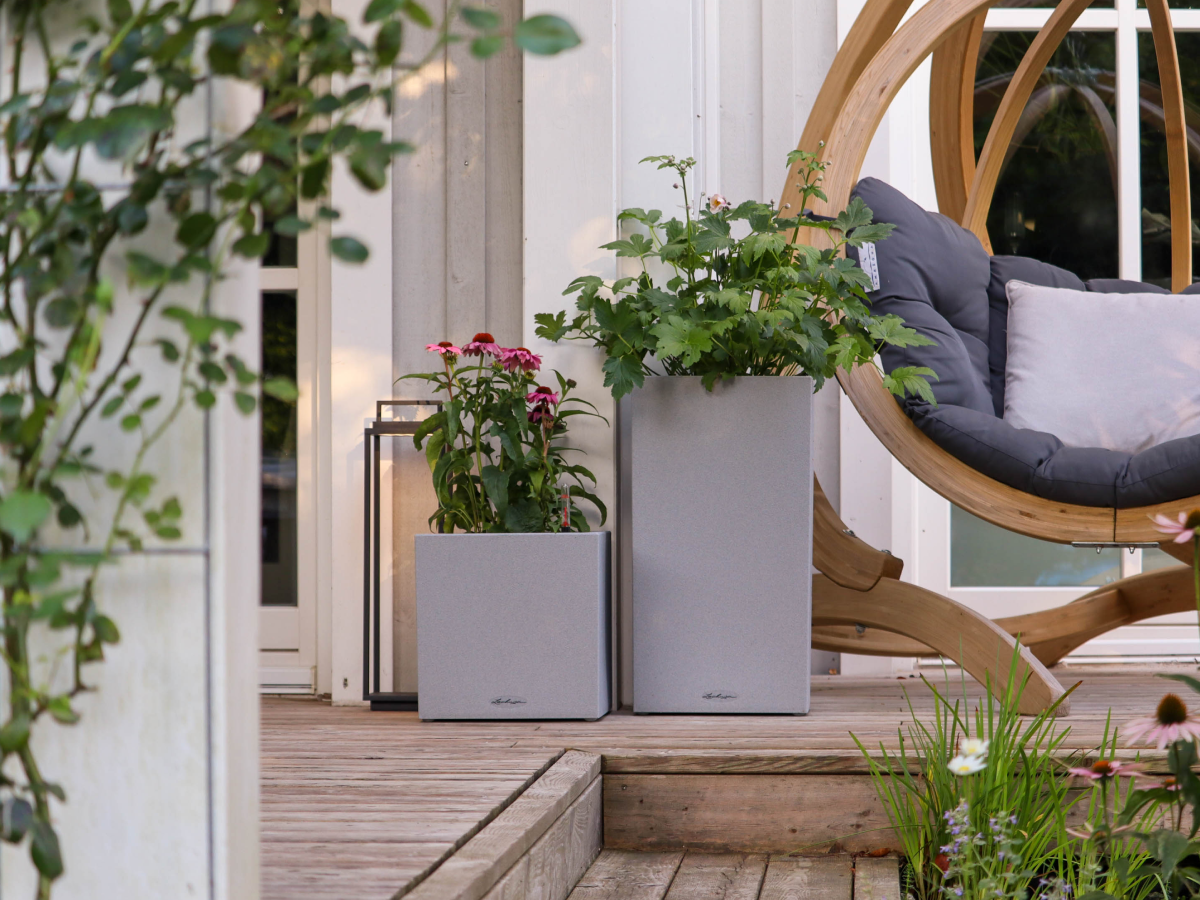
Self-watering planters solve most of that. They store water in a reservoir at the bottom, and the plant pulls moisture up when it needs it. The soil stays consistently moist, and you use far less water.
This helps a lot during restrictions because you are not tied to a strict watering routine. You fill the reservoir and let the planter take care of the rest.
- People usually notice:
- far less water waste
- fewer wilted leaves
- healthier roots
- longer gaps between watering
It is one of the simplest ways to garden more sustainably without sacrificing your plants.
Explore the full range of self-watering planters.
Group Plants with Similar Needs
If you have plants that love water sitting next to plants that barely need any, you will always struggle. Grouping similar plants makes watering more efficient and avoids overdoing it in the wrong spots.
Water Early
Water evaporates fast in Australian heat. Early morning is ideal, and it also lines up with most restriction guidelines. If mornings do not work, late afternoon is fine, as long as the soil has a little time to dry before night.
Self-Watering Planters Make Restrictions Easier
If you feel anxious every time water restrictions are announced, self-watering planters take a lot of pressure off. They are simple, reliable and help you keep plants alive even during long stretches of dry weather.
They suit balconies, courtyards, rentals and any space where watering is limited. They save water, reduce stress on the plant and make the whole process much more forgiving.
You Can Still Have a Healthy Garden
Water restrictions do not have to mean dry, dying plants. With better soil, a few smarter habits and pots that use water efficiently, your garden can stay healthy throughout the year.
Self-watering planters are an easy step toward a more sustainable, water smart garden, no matter where you live in Australia.
Related Articles
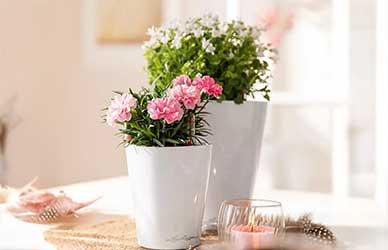
Most indoor plant pots are built to look good in a photo, not to keep your plants alive. Here's what most suppliers won't tell you when choosing an indoor planter in Australia.
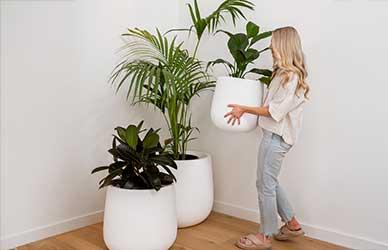
Not all indoor plant pots are created equal. We break down our favourite Lechuza indoor planters for 2026, what makes them different, and how to choose the right one for your space.
Indoor plant walls are transforming Perth homes and offices. Discover how to choose the right vertical garden system for WA's warm, dry climate.
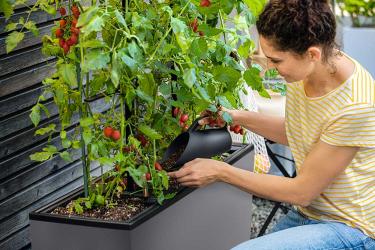
Not all outdoor pots are made equal. A practical guide to choosing durable, low-maintenance planters for Australian homes, balconies and commercial spaces.
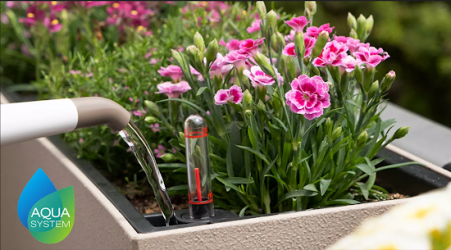
Do self-watering pots really work? Find out how they function, when they're worth it, and how they perform in Australian conditions.
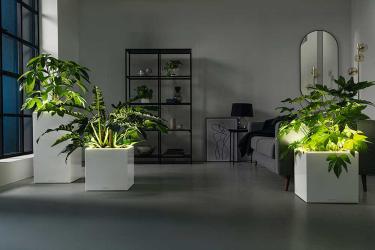
Choosing the wrong pot size is one of the most common planting mistakes. Learn how to get it right for indoor plants, outdoor planters and troughs.
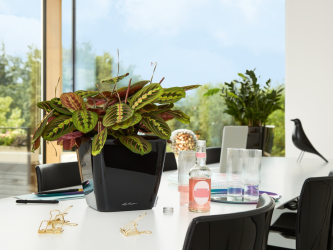
Keep your plants thriving through Australia’s heat with self-watering planters. These pots store water in a built-in reservoir, giving your plants steady moisture and reducing the stress of hot days, dry winds and fast-drying soil. Simple, efficient and perfect for Australian conditions.
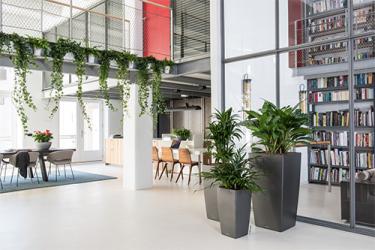
Discover the most common indoor planter mistakes and how to avoid them. Learn how Lechuza self-watering planters and PON substrate keep houseplants healthy and thriving with less effort.
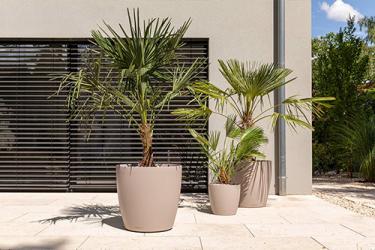
Discover why self-watering planters outperform traditional pots in Australia’s hot, dry climate. Learn how Lechuza’s smart design and PON substrate make plant care easier, save water and keep your garden thriving year-round.
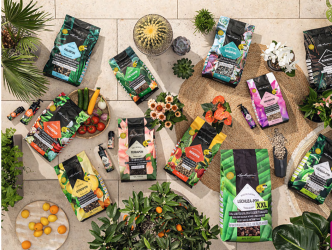
THE ALTERNATIVE TO SOIL! Discover Lechuza substrates and experience the impressive results that can be achieved with the right substrate. Thanks to their outstanding properties, all plant substrates can of course also be used in conventional pots without a LECHUZA irrigation system.